ADHD in Children: Causes, Symptoms and Diagnosis
Understand ADHD in children, its symptoms, possible causes and diagnosis. Learn when to seek an assessment and what support may help your child.

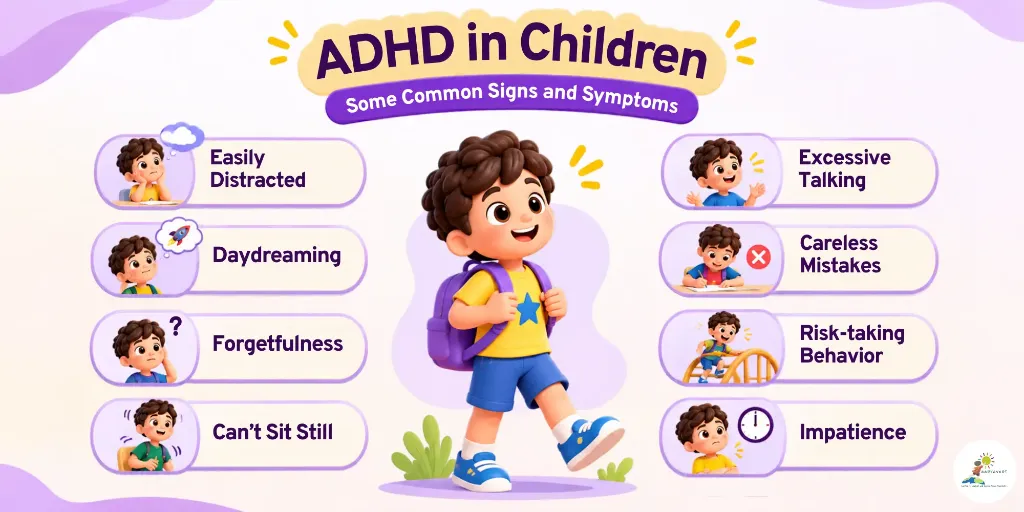
ADHD is a neurodevelopmental condition that affects how a child regulates attention, activity and impulses. The difficulties are persistent, go beyond what is expected for the child’s developmental level and interfere with everyday life.
If your child often loses track of instructions or struggles to wait, it is understandable to have questions. One difficult morning does not establish ADHD. The useful next step is to understand the pattern and seek advice when it affects your child’s learning, relationships or daily activities.
What Is ADHD in Children?
ADHD stands for attention-deficit/hyperactivity disorder. It begins in childhood and can continue into adulthood. A child may mainly struggle with attention, mainly with hyperactivity and impulsivity, or with both.
This means ADHD does not look the same in every child. An unusually quiet child who repeatedly loses track of schoolwork may need help just as much as a child who keeps leaving their seat.
The CDC’s overview of ADHD explains that symptoms can change over time. Support should respond to the child’s current needs rather than a fixed label.
What Are the Main Types of ADHD?
Clinicians describe three ADHD presentations, based on the symptoms present at assessment. These categories describe patterns of difficulty, not a child’s personality or potential.
| Presentation | Main difficulties |
|---|---|
| Predominantly inattentive | Staying focused, organising tasks, remembering instructions and finishing activities |
| Predominantly hyperactive-impulsive | Managing movement, waiting and pausing before acting |
| Combined | Meeting criteria for both symptom groups |
For detailed everyday examples, read our companion article, ADHD Symptoms in Children: A Parent’s Observation Checklist.
What Causes ADHD in Children?
ADHD has no single established cause. Research points to a combination of influences, with genetics playing an important role. Having a risk factor does not mean a child will develop ADHD.
Genetics and Brain Development
ADHD often runs in families. Researchers also study differences in brain development and the systems involved in attention and self-regulation. This does not mean a brain scan can confirm ADHD.
The National Institute of Mental Health (NIMH) explains that the causes are not fully understood and probably involve several factors.
Pregnancy, Birth and Environmental Risk Factors
Research has identified associations with premature birth, certain prenatal exposures and environmental toxins such as lead. These are population-level findings, not a way to determine why an individual child has ADHD.
Discuss relevant medical or exposure history with your clinician. Avoid drawing conclusions or assigning blame from a risk-factor list.
Common Misunderstandings About ADHD Causes
ADHD should not be explained as a child being lazy or a parent failing to discipline them. The American Academy of Pediatrics also states that evidence does not support sugar or immunisations as causes.
Daily habits can still affect wellbeing and behaviour. A helpful routine supports a child, but difficulty following that routine does not tell you what caused their difficulties.
How Is ADHD Diagnosed in Children?
ADHD diagnosis requires a clinical evaluation. There is no single blood test, online quiz or scan that establishes it.
A qualified clinician considers development, health history, symptoms and their impact. Information from parents and teachers helps show what happens beyond the appointment.
An evaluation may include:
- Conversations with you and your child.
- Reports from school and other caregivers.
- Standardised rating scales.
- Assessment for other explanations or co-occurring conditions.
- Hearing, vision or other medical checks when indicated.
What Diagnostic Criteria Do Clinicians Consider?
Under DSM-5-based criteria, clinicians assess a persistent, developmentally inappropriate symptom pattern. The numbers below are diagnostic requirements, not a self-assessment score:
- Symptoms last at least six months.
- Several symptoms were present before age 12.
- Symptoms occur in two or more settings.
- There is clear interference with functioning.
- Another condition does not better explain the symptoms.
Children through age 16 generally need six or more symptoms within a symptom group. From age 17, the threshold is five. Combined presentation requires meeting both groups’ thresholds.
Do not wait six months to ask for help. A clinician can discuss concerns and support before a diagnosis is established.
What Else Can Look Like ADHD?
Attention or behaviour difficulties do not automatically mean ADHD. Sleep problems, anxiety, depression and learning difficulties can produce similar symptoms. Some conditions can also occur alongside ADHD.
This is why an assessment should explore the whole picture rather than confirm a parent’s initial suspicion.
ADHD and autism are different conditions, although a child can have both. For a separate explanation, see Aaryavart’s guide to what autism is.
What Support Helps Children With ADHD?
ADHD support is chosen around age, needs, daily difficulties and family circumstances. Evidence-based care can include parent training in behaviour management, school interventions and medication prescribed and monitored by an appropriate clinician.
The CDC’s treatment guidance, reflecting American Academy of Pediatrics recommendations, prioritises parent training in behaviour management for children younger than six. For children six and older, recommendations include medication alongside behavioural and school support. Your child’s clinician should explain the options appropriate to your setting.
At home, choose one manageable change to discuss with the care team:
- Give one clear instruction at a time.
- Break a demanding task into smaller parts.
- Keep frequently used items in a consistent place.
- Notice effort and useful strategies.
- Agree on school support with the teacher.
For example, replace “Get everything ready” with “Put your notebook in your bag.” Then show the next step.
Where Can a Visual Schedule Fit?
A visual schedule displays a sequence of tasks using pictures or words. It is an organisational aid to try alongside appropriate care, rather than a diagnostic tool or a replacement for treatment.
Families looking for an ADHD app for visual schedules can explore Sarya. Its routine-building features include picture steps and personalised voice prompts. Start with one short routine and check whether the format suits your child.
How Can Aaryavart Help Families Take the Next Step?
If attention, activity or impulsive behaviour is affecting daily life, you can begin by discussing your concerns and asking what assessment is appropriate.
Aaryavart’s assessment process includes parent discussion and consideration of communication, behaviour, attention and daily living needs. You can review the team, explore behaviour support, or request a child development assessment.
Ask who will assess your child, whether a formal ADHD evaluation is available, and whether a specialist referral is needed. A developmental assessment and a formal ADHD diagnosis are not interchangeable.
ADHD in Children FAQs
At What Age Can ADHD Be Diagnosed?
An evaluation can be considered during the preschool years, but diagnosis is more difficult in very young children. The American Academy of Pediatrics’ evaluation guidance covers ages four to eighteen. Younger children with concerns still deserve developmental advice and support.
Does ADHD Go Away as a Child Grows?
Symptoms may change or become less noticeable with age, but ADHD can continue into adulthood. Treatment and practical strategies can help manage its impact.
Does Every Child With ADHD Need the Same Treatment?
No. Age, symptoms, other health needs and family circumstances influence treatment. Discuss the expected benefits, limitations and monitoring of each option with your child’s clinician.
Is ADHD Hereditary?
ADHD often runs in families, and genes play an important role. However, having a parent or sibling with ADHD does not mean a child will definitely have it. Family history is one part of an assessment, not a diagnosis.
Is ADHD the Same as a Learning Disability?
No. ADHD and learning disabilities are different conditions, although a child can have both. Difficulties with attention can affect schoolwork, while a learning disability may involve specific skills such as reading or writing. Assessment helps identify which support is needed.
Can ADHD in Children Be Cured?
There is currently no cure for ADHD, but treatment can help manage symptoms and their impact. Support may include behavioural approaches, school adjustments and medication where appropriate. The aim is to help your child learn, participate and manage everyday difficulties.