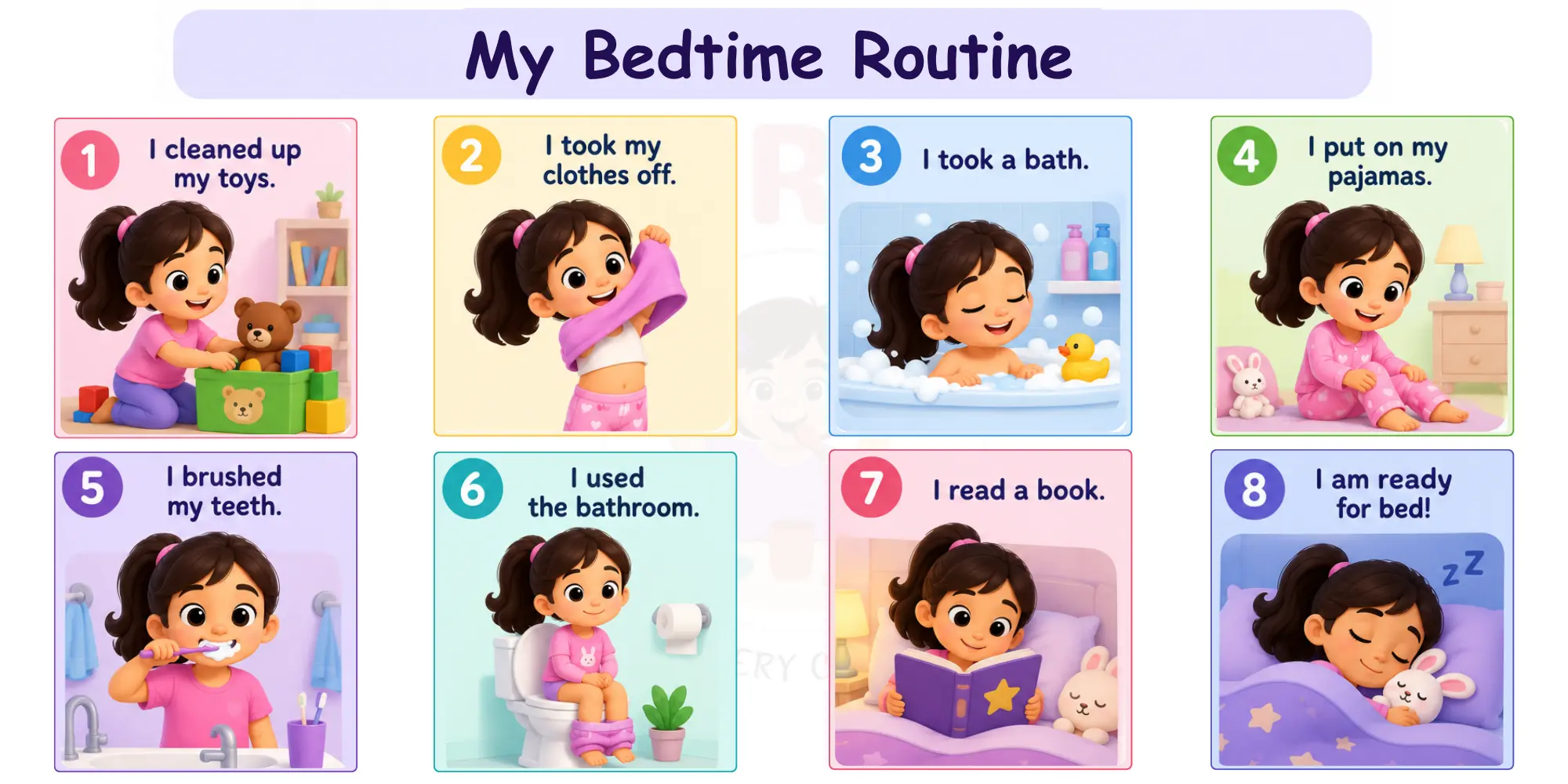
How to Build a Bedtime Routine Chart Your Child Will Actually Follow
Bedtime battles every night? Build a visual bedtime routine chart that eases sensory overload, cuts meltdowns, and helps your child sleep better.
If bedtime in your house looks like a second wind instead of a wind-down, you already know the feeling: a child who was yawning at dinner is suddenly bouncing off the bed at 8 pm, fighting every single step between "get ready" and "lights out." It's exhausting, and it's not because your child is being difficult on purpose.
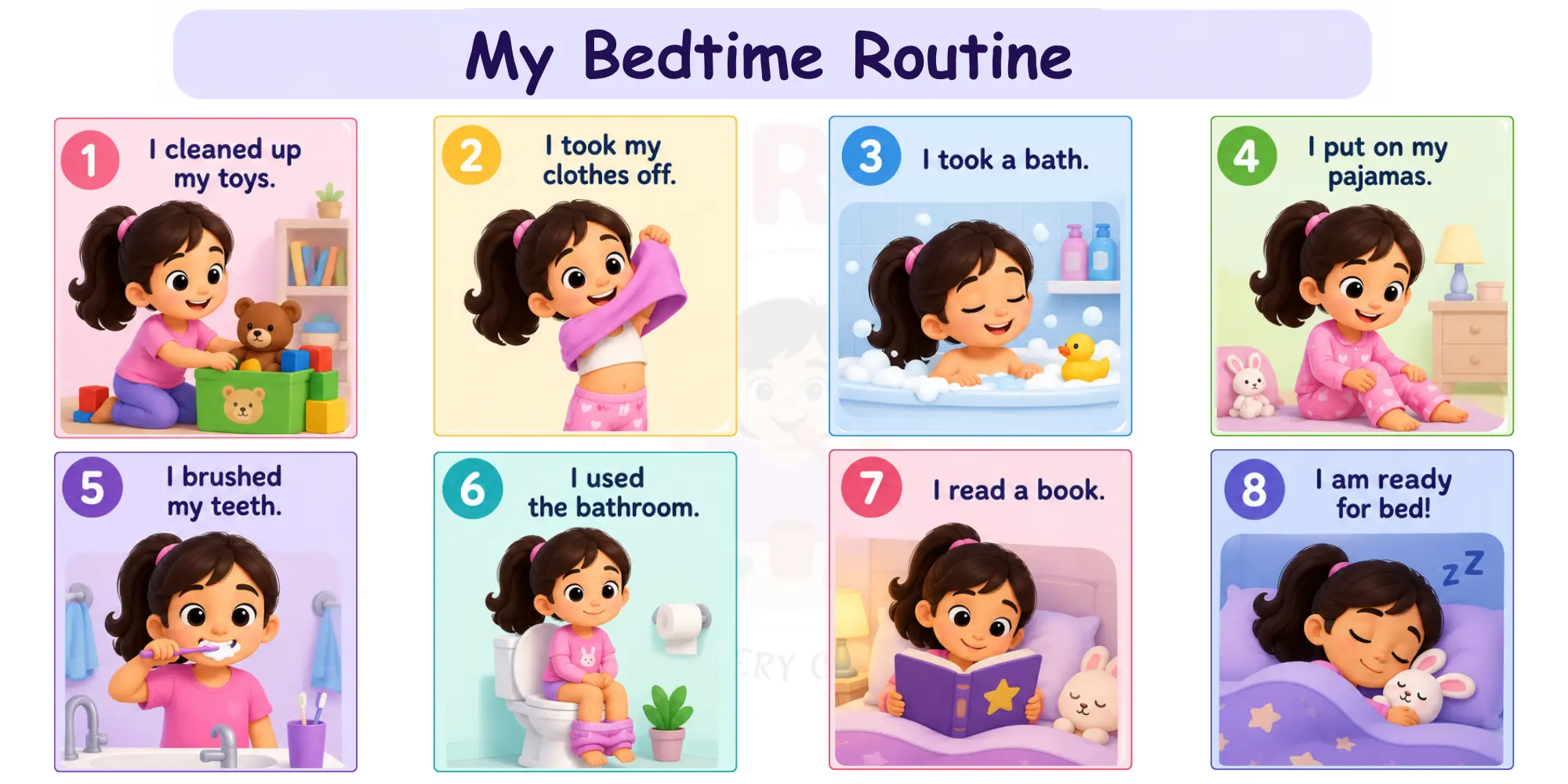
A bedtime routine chart, built the right way, fixes this by giving your child's nervous system time to actually come down from the day instead of asking it to switch off instantly. In this guide, you'll get the real reasons bedtime falls apart, a step-by-step way to build a chart that works, age-specific timing backed by sleep research, and specific adjustments for kids with ADHD, autism, or sensory sensitivities, whose bedtime struggles usually need more than a generic printable.
This guide draws on input from child development specialists and therapists at Aaryavart Centre whose team works daily with families building functional home routines.
Why Bedtime Turns Into a Meltdown
Before building a chart, it's worth understanding why the current approach—calling out instructions or announcing "bedtime now"—isn't landing. It's rarely about defiance.
A day's worth of noise, light, activity, and social effort doesn't just switch off because the clock says 7:30. A child's nervous system needs a runway to come down from that stimulation, and an abrupt "go to sleep now" asks it to do something it isn't ready for. That mismatch—being told to sleep while still physiologically wired—is what actually looks like a meltdown from the outside.
What the Research Says
The case for a structured wind-down isn't just parenting folklore. It's backed by pediatric guidance and clinical research.
- The American Academy of Pediatrics puts it directly: "Having a predictable nighttime routine can help your child understand and learn to expect what comes next," and such routines "may ease the stress that some families experience at bedtime," according to HealthyChildren.org, the AAP's parent-facing site.
- For children with autism specifically, sleep problems are far more common than most parents realize. A research review published through the National Institutes of Health's National Library of Medicine found that between 50% and 80% of children with autism experience sleep problems, a rate well above the general pediatric population.
In plain terms: a chart that predicts the sequence of the evening does real physiological work. It's not decoration—it's the runway your child's brain needs before sleep can actually happen.
What Makes a Bedtime Routine Chart Actually Work
Not every chart earns its place on the wall. The ones that genuinely change bedtime share a few design choices in common, and they're different from what makes a great morning chart.
Calm Activities in Calm Order
The sequence matters as much as the steps themselves. Move from more stimulating to less stimulating (bath, then pajamas, then teeth, then a book, then lights out), never the other way around. A chart that ends on an exciting note undoes everything the earlier steps built.
The Same Steps, Every Night
Per the AAP, "the key is to have a predictable series of steps that help them wind down from the day," from HealthyChildren.org. Predictability is what lets your child's brain start anticipating sleep instead of resisting it, and that anticipation is the whole mechanism behind why a routine works better than a one-off instruction.
Start Earlier Than You Think
The AAP also notes that putting a child to bed 15 to 20 minutes before their usual tired signals show up can noticeably improve rest for the whole family, per the same HealthyChildren.org guidance. Waiting for visible exhaustion often means you've already missed the calm window and are now negotiating with an overtired child instead.
Sensory-Friendly Transition Cues
A dimmed light or a soft, consistent sound before each step change gives an already-tired sensory system a warning instead of a sudden demand. This one small habit prevents a lot of the resistance that shows up right when you try to move from one step to the next.
If mornings are also a challenge for your family, see our complete guide on building an effective morning routine chart.
Building Your Bedtime Routine Chart, Step by Step
Once you understand why a calm, predictable, sensory-aware sequence works, building the actual chart comes down to following these steps in order:
- List the real wind-down sequence you want, moving from most to least stimulating: bath, pajamas, teeth, a book, lights out.
- Break each step into one or two small parts your child can picture, the same principle that makes any visual chart easier to follow.
- Choose calming pictures over exciting ones. Soft colors and simple icons work better here than the bright, playful graphics that suit a morning chart; this chart's job is to calm, not energize.
- Post it where each step actually happens, the bathroom for teeth and bath, the bedroom for pajamas and the book, not a chart stuck on the fridge nowhere near bedtime.
- Walk through it once on a calm afternoon, never for the first time during an already-overtired night. First impressions of a new routine should never happen mid-meltdown.
- Use a quiet way to mark progress, a soft tap or a sticker placed calmly, not an exciting reward moment that re-energizes your child right when you need them winding down.
- Revisit it every couple of weeks for the first month. A sequence that needed heavy prompting at two years old often needs far less by four; that's progress, not a sign the chart stopped working.

Bedtime Routine Ideas by Age
A bedtime chart that works for a toddler will bore or under-serve a nine-year-old, and the right length and detail level changes with age, along with how much sleep your child actually needs.
Toddlers (1 to 2 Years): 11 to 14 Hours Needed
According to the American Academy of Sleep Medicine, endorsed by the AAP, toddlers need 11 to 14 hours of sleep per 24 hours, including naps. Keep the chart to three or four big steps and skip clock references entirely; a toddler doesn't yet connect a number on a clock to anything meaningful.
Preschoolers (3 to 5 Years): 10 to 13 Hours Needed
The same AASM guidance recommends 10 to 13 hours for this age group. A five or six step chart works well here, and this is a good age to introduce a simple visual timer for the wind-down window rather than relying on verbal countdowns.
School-Age (6 to 12 Years): 9 to 12 Hours Needed
Per AASM, school-age children need 9 to 12 hours of sleep per 24 hours. At this stage, most kids do better with more independence: a shorter list they check off themselves, and often a shift from a wall chart to a version they manage on a phone or tablet.
Making a Bedtime Routine Chart Sensory and Neurodivergent-Friendly
A standard chart is a solid starting point, but a chart for a child with ADHD, autism, or sensory sensitivities usually needs a few specific adjustments, because bedtime resistance in these kids is often sensory, not just behavioral.
- Dim, warm lighting through the whole routine, not a bright room until the exact second the lights switch off. A sudden shift from bright to dark asks too much of an already-tired sensory system.
- Build a comfort object or weighted blanket into the chart itself, as a fixed step rather than a separate, negotiable extra that gets argued over each night.
- Cut screens for the last 30 to 60 minutes before bed. Screen light and stimulating content work directly against the wind-down the rest of the chart is trying to create.
- Use a visual timer instead of a countdown you say out loud, especially useful for kids with ADHD-related time blindness who struggle to translate "five more minutes" into an actual sense of time passing.
- Consider a digital or interactive routine when the sticking point is the transition itself. A chart that dims its visuals as bedtime approaches gives a cue that paper simply can't.
That NIH-cited statistic of 50% to 80% of autistic children having sleep problems, from the research review linked above, isn't a reason to give up on a bedtime chart. It's the reason a sensory-aware one matters more, not less.
To learn more about tailored developmental strategies, explore our resources on autism therapy services and occupational therapy.
Paper Chart, Free Printable, or Visual App? Choosing the Right Format
Most parents searching for a bedtime routine chart picture a printable taped to the wall, and that's a completely fair starting point. Here's how the three real options actually compare once you factor in what bedtime specifically needs:
| Format | Pros | Cons | Best For | | :----------------------------- | :------------------------------------------ | :--------------------------------------------- | :------------------------------ | | Paper or DIY Chart | Free, highly tactile, easy to customize | Does not dim, no reminders after you walk away | Toddlers and younger children | | Printable PDF Template | Fast setup, clean visual | Static, needs manual tracking | Quick initial trial of routines | | Visual Routine Board / App | Dynamic timers, auto-advances, sensory cues | Needs screen lock/dim settings | Older kids & children with ADHD |
If printables have gotten your family partway there but bedtime still stalls out most nights, that's usually the format hitting its limit, not a sign your child can't follow a routine.
Common Mistakes That Make a Bedtime Routine Chart Fail
Most bedtime charts that stop working fail for a small, fixable set of reasons, and none of them mean the whole idea doesn't work for your child.
- Screens included in the wind-down, or right before it. This undoes the calming sequence the rest of the chart is trying to build.
- A chart that's visually exciting (bright colors, big rewards) instead of calming. The wrong tool for the moment it's meant to be used in.
- An inconsistent bedtime, even with a good chart. The routine and the clock need to move together, not just the routine alone.
- Introducing the chart for the first time on an already-overtired night instead of a calm afternoon.
- Turning it into a reward negotiation right before sleep, which re-stimulates a child at the exact moment you want them settling down.
Sample Bedtime Routine You Can Copy Today
A bedtime routine is simply a fixed, calming sequence of steps in the 45 to 60 minutes before lights out. Here's a sample chart for a school-age child with a 7:30 pm bedtime; shift it earlier for toddlers and preschoolers using the age-based sleep hours above:
- 6:45 pm: Bath or wash up.
- 7:00 pm: Pajamas and comfort object.
- 7:10 pm: Brush teeth.
- 7:15 pm: Dim the lights.
- 7:20 pm: Book together.
- 7:30 pm: Lights out.
For toddlers, stretch this over a longer, looser window and drop the book step down to a shorter picture book or a simple song. For tweens, compress the steps and let them self-check the sequence without a reminder.
When Bedtime Struggles Are More Than a Phase: Signs to Talk to a Professional
A bedtime routine chart is a genuinely effective daily tool, but it isn't a diagnosis, and it isn't therapy. It's worth being upfront about where its job ends.
Consider talking to a professional if:
- Bedtime resistance is extreme most nights, not just occasionally.
- Your child shows strong reactions to ordinary bedtime sounds, textures, or lighting that seem out of proportion to the trigger.
- A consistently used, well-built chart still isn't helping after four to six weeks.
If any of this sounds familiar, Aaryavart Centre's sensory therapy team works specifically with sensory processing concerns in children with autism and ADHD, in person across their centres and online for families anywhere. For meltdowns that look more behavioral than sensory, Aaryavart's behavior therapy team covers both ADHD and autism as well. You can also start with an assessment booking for a professional evaluation.
Bedtime Routine Charts FAQs
What should be included in a bedtime routine chart?
A short, calming sequence, typically bath or wash-up, pajamas, teeth, a calm activity like a book, then lights out. The order should move from more active to more calming, never the reverse.
What is a normal bedtime by age?
The American Academy of Sleep Medicine recommends 11 to 14 hours of sleep per 24 hours for toddlers, 10 to 13 hours for preschoolers, and 9 to 12 hours for school-age children, including naps where applicable, according to their Child Sleep Duration Health Advisory. Work backwards from your child's wake time to find the bedtime that fits this range.
How long should a bedtime routine take?
Most children do well with a 30 to 60 minute wind-down window. Shorter routines suit toddlers, while school-age kids can usually handle a slightly longer, more independent sequence.
My child gets more wound up during the bedtime routine, not calmer. What's wrong?
This usually means a step in the routine is too stimulating for that time of day, often a screen, bright lighting, or an exciting reward moment placed too close to lights out. Move active steps earlier in the evening and keep the last 20 to 30 minutes deliberately low-stimulation.
Is a bedtime routine chart useful for children with autism or ADHD?
Yes, often more so than for neurotypical children. Research indicates that between 50% and 80% of children with autism experience sleep problems, according to a review published via the National Institutes of Health, and predictable, sensory-aware routines are a recommended approach for improving sleep in these children.
Should I use a picture chart or a digital chart for bedtime?
Both rely on the same visual principle, but a digital chart can add something paper can't: visuals that dim themselves as bedtime approaches and a built-in visual timer for the wind-down countdown, which is especially useful for children with time blindness.
What's the difference between a bedtime routine chart and a morning routine chart?
They use the same visual-chart principle with opposite pacing. A morning chart moves toward alertness and out-the-door, while a bedtime chart moves toward calm and sleep.
When should we see a professional instead of just using a chart?
If bedtime resistance is extreme most nights, involves strong sensory reactions, or a consistent routine hasn't helped after four to six weeks, it's worth talking to a professional. Aaryavart Centre's sensory therapy team supports children with autism and ADHD, in person and online.
Does a visual bedtime routine chart work for children with autism, ADHD, or Down syndrome?
Yes. A visual routine builder is designed to work across autism, ADHD, and Down syndrome, with calming, visual icons built in from the start.