Parent Training for Autism at Home: A Practical Guide for Parents
Learn parent training for autism at home with daily routines, communication tips, behaviour support, sensory strategies, and expert guidance.

Many parents feel unsure after therapy sessions. They want to help their child at home, but daily life is full of real challenges: meals, bath time, brushing, screen-time transitions, bedtime, communication struggles, sensory overload, and meltdowns.
This is where parent training for autism at home becomes important. It does not mean parents have to become therapists. It means parents learn simple, practical strategies to support their child during everyday routines.
Autism support works best when it is not limited to therapy rooms. The CDC explains that autism treatment plans are usually individualized and may include behavioural, developmental, educational, and social-relational approaches. Behavioural approaches often focus on understanding what happens before and after a behaviour.
If you are unsure where to begin, start with a professional child assessment so your home plan matches your child’s real needs.
What is Parent Training for Autism at Home?
Parent training is guidance for parents and caregivers. It helps them understand how to support communication, behaviour, routines, sensory needs, play, learning, and independence at home.
The goal is not to blame parents. The goal is to give parents tools that make daily life clearer for the child and calmer for the family.
Simple Meaning
Parent training teaches parents how to use therapy strategies in real-life situations.
It may include:
- Giving clear instructions
- Supporting speech and communication
- Reducing meltdowns during transitions
- Creating a daily schedule for autistic child
- Encouraging eye contact naturally
- Helping with self-care skills
- Supporting sensory regulation
- Teaching replacement behaviours
- Building play and interaction
For example, if a child is learning to request “water” in therapy, parents can practice the same skill during meals, play, and bedtime.
What Parent Training Is Not
Parent training should be practical and respectful. It should never make parents feel guilty.
It is not:
- A cure for autism
- A replacement for therapy
- A punishment system
- A way to force a child to act “normal”
- A generic activity list copied from the internet
- A substitute for medical or developmental assessment
A good home plan should be based on the child’s age, communication level, sensory profile, behaviour patterns, strengths, and family routine.
Why Parent Training Matters in Autism
Parents are with the child during the most important moments of the day. A therapist may work with a child for a few hours, but parents support the child across meals, sleep, play, school preparation, outings, and transitions.
WHO states that evidence-based psychosocial interventions can improve communication and social skills, with a positive impact on autistic people and caregivers. WHO also recommends practical support and services according to individual needs.
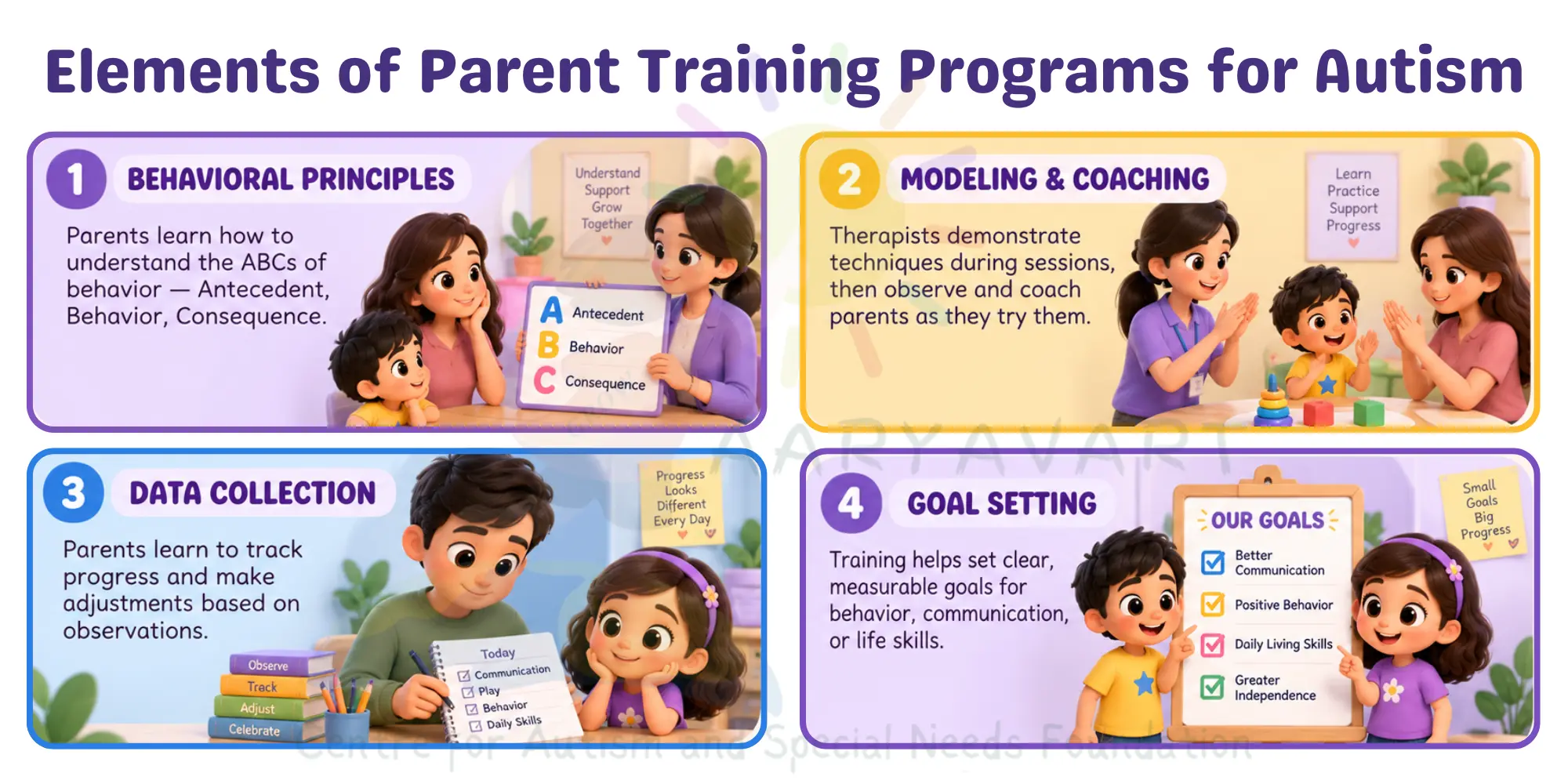
Therapy Works Better When Home Practice Continues
A skill learned in therapy becomes meaningful when it is used at home.
For example:
- Speech goals can be practiced during snack time.
- OT goals can be practiced while dressing.
- Behaviour goals can be practiced during transitions.
- Sensory strategies can be used before outings.
- Self-care goals can be practiced during brushing or bathing.
This is why parent training is often the bridge between therapy progress and real-life progress.
Parents Learn to Understand Triggers
Many behaviours have a reason. A child may cry, run away, shout, or refuse because something is too hard, too sudden, too noisy, too confusing, or too overwhelming.
Parent training helps parents ask better questions:
- What happened before the behaviour?
- Was the instruction too long?
- Was the child tired or hungry?
- Was the environment too loud?
- Did the routine change suddenly?
- Could the child communicate what they wanted?
- What happened after the behaviour?
This helps parents respond with support instead of panic.
What Parents Can Learn Through Autism Parent Training
Parent training is most useful when it focuses on daily situations. Parents do not need complicated theory. They need strategies they can use at home today.
Communication Support at Home
Communication is not only speech. It can include gestures, pointing, pictures, eye gaze, sounds, words, signs, or communication devices.
Parents can support communication by:
- Using short, clear words
- Offering choices
- Waiting before helping
- Naming objects during play
- Responding to attempts, not only clear words
- Using gestures and pictures
- Reducing too many questions
- Creating reasons for the child to request
Example: Instead of asking, “What do you want to eat?” give two choices: “Banana or biscuit?”
For children with speech delay, parents can also explore Speech Therapy.
Behaviour Support at Home
Behaviour support starts with understanding. Many challenging behaviours reduce when parents learn what the child is trying to escape, access, avoid, or communicate.
A JAMA randomized clinical trial found that a 24-week parent training program was better than parent education for reducing disruptive behaviour in children with autism, although the authors noted that clinical significance was unclear on some measures.
Parents may learn to:
- Identify triggers
- Use visual cues
- Give one instruction at a time
- Reinforce helpful behaviour
- Teach a replacement behaviour
- Stay consistent across caregivers
- Reduce accidental reinforcement of unsafe behaviour
For more structured support, see Behaviour Therapy for Autism.
Daily Schedule for Autistic Child
A daily schedule for autistic child helps the child understand what is happening now, what comes next, and when an activity is finished.
This can reduce confusion during routines like:
- Wake up
- Brush teeth
- Breakfast
- School
- Therapy home practice
- Play
- Screen time
- Bath
- Dinner
- Bedtime
A visual routine is often easier than repeated verbal instructions. Parents can use Sarya to create visual routines, voice prompts, and progress tracking for daily schedules and ADL skills.
Sensory Regulation at Home
Some autistic children are sensitive to sound, touch, light, movement, smell, or food textures. Others seek more movement, pressure, or sensory input.
Parent training can help parents understand:
- When the child needs a break
- Which environments trigger overload
- How to prepare before outings
- How to use calming routines
- How to reduce sensory stress at home
- When to consult an occupational therapist
Useful services: Sensory Therapy and Occupational Therapy.
Self-Care and Independence Skills
Parent training can also support Activities of Daily Living, often called ADL skills.
These include:
- Brushing
- Bathing
- Dressing
- Toileting
- Eating
- Packing a school bag
- Cleaning up toys
- Following bedtime routine
Small self-care wins matter. When a child learns one step independently, the child gains confidence and the family gains relief.
How to Start Parent Training at Home
The biggest mistake parents make is trying to work on everything at once. Home training works better when the plan is small, clear, and consistent.
A 2022 review notes that caregiver-implemented interventions require parents to learn new ways of thinking, acting, and communicating, and consistency in everyday life plays an important role.
Step 1: Start With One Goal
Choose one goal that will make daily life easier.
Examples:
- Child requests water
- Child follows one instruction
- Child sits for meals
- Child brushes with support
- Child transitions from screen time
- Child responds to name
- Child completes one bedtime step
Do not start with five goals. One clear goal is easier to practice and track.
Step 2: Use the Same Strategy Daily
Consistency matters more than doing many different activities.
If you use “first brush, then story” today, use the same language tomorrow. If you use a visual card for bedtime, keep using it daily.
Children often need repetition before a routine becomes familiar.
Step 3: Track Small Progress
Progress is not always dramatic. Sometimes progress means the child cried for 5 minutes instead of 20. Sometimes it means the child looked at the picture card. Sometimes it means the child accepted help without running away.
Track simple things:
- Number of requests
- Time spent sitting
- Number of meltdowns
- Steps completed
- Words or gestures used
- Triggers noticed
- Routines that became easier
Step 4: Review With a Therapist
Home practice should not become guesswork. Review progress with a therapist or child development professional.
Aaryavart’s therapy process includes assessment, therapy roadmap, parent guidance, home practice, and progress review.
Sample Parent Training Plan at Home
A sample plan helps parents understand what home training can look like. This is not a fixed prescription. It should be adjusted after assessment.
Morning Routine Plan
Mornings need fewer words and more structure. Keep the routine predictable.
| Goal | Parent Strategy |
|---|---|
| Wake up calmly | Use the same wake-up routine daily |
| Brush teeth | Show a picture or visual step |
| Get dressed | Offer two clothing choices |
| Eat breakfast | Keep timing predictable |
| Pack school bag | Use a checklist or visual card |
Communication Practice Plan
Communication can be built into everyday life.
| Situation | Parent Can Try |
|---|---|
| Snack time | Offer two choices |
| Playtime | Pause and wait for request |
| Bath time | Name actions like wash, pour, dry |
| Story time | Point to pictures and wait |
| Outdoor play | Practice words like go, stop, more |
Behaviour Support Plan
Behaviour support works best when parents respond calmly and consistently.
| Challenge | Parent Strategy |
|---|---|
| Crying during transition | Use first-then language |
| Throwing objects | Teach “help” or “break” |
| Refusing a task | Reduce steps and guide visually |
| Screen-time meltdown | Use timer and visual warning |
Parent Training vs Autism Therapy
Parent training and autism therapy are connected, but they are not the same.
Parent training teaches parents what to do at home. Autism therapy works directly with the child through structured developmental goals. Many children benefit when both happen together.
Parent Training Helps At Home
Parent training is useful for:
- Daily routines
- Communication practice
- Behaviour support
- Mealtime strategies
- Self-care practice
- Transition support
- Sleep and bedtime structure
- Parent confidence
Autism Therapy Helps With Skill Building
Therapy may be needed for:
- Speech delay
- Sensory needs
- OT goals
- ABA-based support
- Social communication
- Learning readiness
- Behaviour planning
- School readiness
Aaryavart provides Autism Therapy, Parent Training for Autism, and Home Plan for Autism.
When Should Parents Seek Professional Help?
Home strategies are useful, but some signs need professional assessment. Parents should not wait for the child to “grow out of it” if delays or difficulties are affecting daily life.
The CDC says autism begins before age 3, symptoms may appear by 12 months in some children, and early intervention services can greatly improve development.
Do Not Wait If You Notice These Signs
Book an assessment if your child has:
- No speech or very limited speech
- Poor response to name
- Frequent meltdowns
- Aggression or self-injury
- Severe sensory issues
- Poor eye contact with other signs
- Difficulty following simple instructions
- Feeding or sleep concerns
- Delayed self-care skills
- Regression or loss of skills
You can start with Aaryavart Child Assessment.
How Aaryavart Supports Parent Training for Autism at Home
Aaryavart Centre provides parent training through assessment-led guidance, therapy goals, home practice plans, and regular progress review. The aim is to make parents feel clearer, not overwhelmed.
Support may include:
- Autism therapy planning
- Speech and communication strategies
- Behaviour guidance
- OT and sensory strategies
- Daily schedule planning
- Home development program
- Online parent training
- Centre-based support in Lucknow, Gorakhpur, and Unnao
Aaryavart’s parent training service explains that guided parent coaching helps therapy continue through everyday routines like meals, playtime, and bedtime.
Useful links:
- Parent Training for Autism
- Home Plan for Autism
- Online Autism Therapy
- Lucknow Centre
- Gorakhpur Centre
- Unnao Centre
Conclusion
Parent training for autism at home is not about doing everything perfectly. It is about learning small, practical strategies that make daily routines easier for your child.
Start with one goal. Use simple language. Build a visual routine. Practice during real moments. Track small progress. And when you are unsure, get expert guidance instead of guessing.
Need a home plan for your child? Book an assessment with Aaryavart Centre and get parent-guided strategies for communication, behaviour, routines, sensory needs, and independence.
Parent Training for Autism at Home FAQs
What is parent training for autism at home?
Parent training for autism at home teaches parents practical strategies to support communication, behaviour, routines, sensory regulation, play, and independence in daily life.
Can parents do autism therapy at home?
Parents can support autism therapy at home through therapist-guided activities, communication practice, visual routines, behaviour strategies, and self-care practice. It should not replace professional assessment or therapy when needed.
What should I teach my autistic child at home first?
Start with one practical goal such as requesting, responding to name, following one instruction, brushing teeth, sitting for meals, or using a daily schedule.
How do I create a daily schedule for autistic child?
Use simple visual steps for wake-up, brushing, meals, school, therapy practice, play, screen time, bath, and bedtime. Keep it predictable and start with only a few steps.
Does parent training help with autism behaviour?
Yes, parent training can help parents understand triggers, reduce confusion, reinforce helpful behaviour, and teach replacement skills. Research supports parent training for reducing disruptive behaviour in some autistic children.
Is online parent training useful for autism?
Yes, online parent training can be useful when it is structured, child-specific, and guided by professionals. It is helpful for families who cannot visit a centre regularly.
How long does parent training take?
It depends on the child’s needs and parent goals. A review found parent-implemented interventions may involve 2 to 48 hours of training over 5 weeks to 2 years, depending on the model.
When should I book professional help?
Book help if your child has speech delay, frequent meltdowns, poor response to name, sensory issues, feeding difficulties, self-care delays, aggression, or regression.