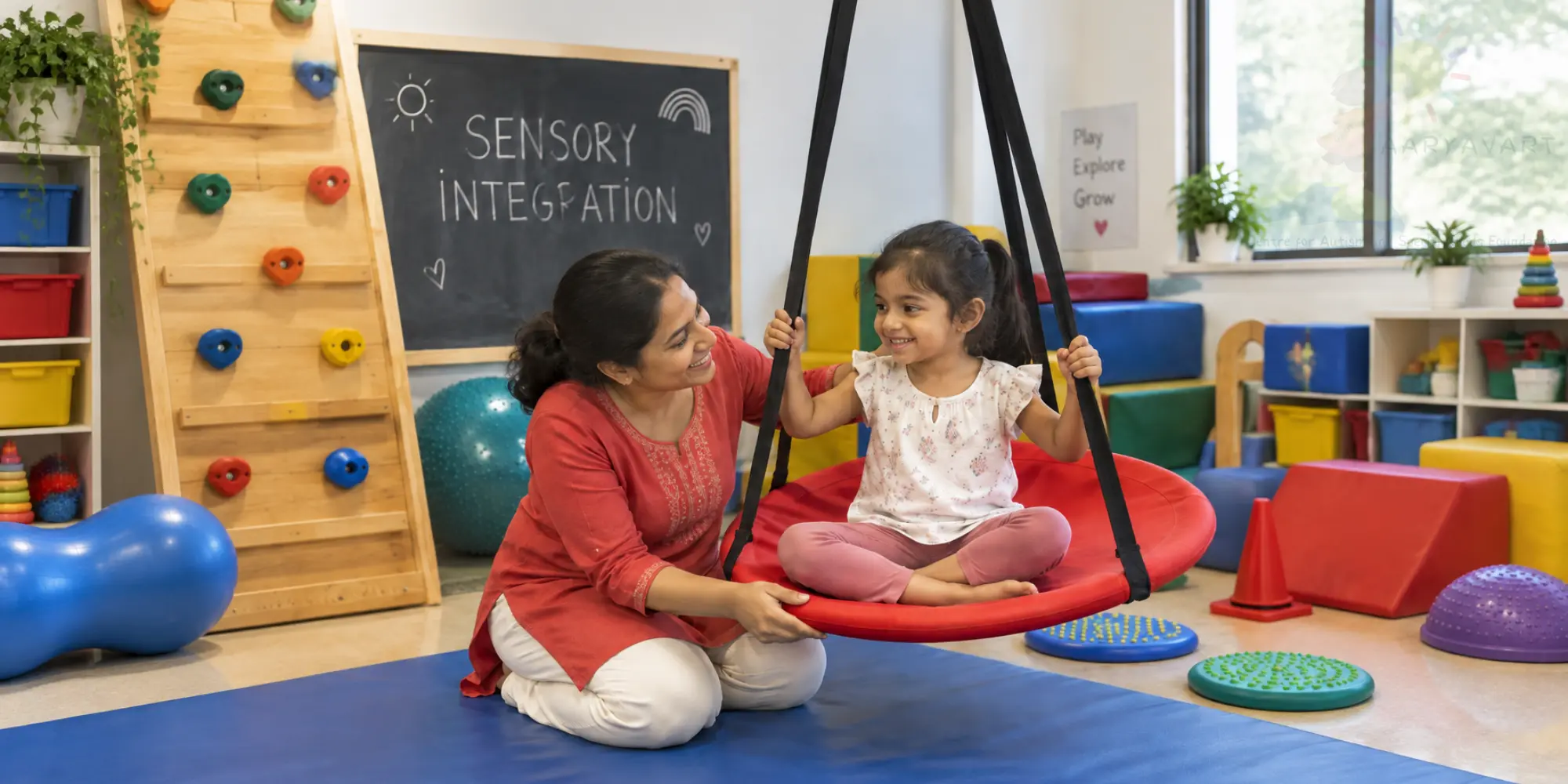
Occupational Therapy for Sensory Issues in Children: Signs & Support
Learn how occupational therapy helps children with sensory issues, autism, ADHD, meltdowns, food sensitivity and daily routine challenges.

Many parents first notice sensory issues in everyday situations: a child covering ears during normal sounds, crying during haircuts, avoiding certain food textures, constantly jumping or crashing into things, refusing some clothes, or melting down in crowded places.
These behaviours are not always “bad behaviour.” Sometimes, the child’s brain may be struggling to process sound, touch, movement, light, taste, smell, or body sensations in an organised way. Occupational therapy for sensory issues helps children understand, tolerate, and respond better to sensory input so daily life becomes easier.
At Aaryavart Centre, sensory support usually begins with a child development and OT assessment, followed by a personalised plan for sensory regulation, daily routines, play, self-care, school readiness, and parent-guided home practice.
What Are Sensory Issues in Children?
Sensory issues happen when a child reacts too strongly, too weakly, or unusually to sensory input. This can affect behaviour, attention, feeding, sleep, learning, play, and emotional regulation.
Children may be sensitive to some sensations and actively seek others. For example, the same child may cover ears during loud sounds but also enjoy spinning, jumping, or deep pressure.
Common sensory areas include:
| Sensory Area | What Parents May Notice |
|---|---|
| Sound | Covers ears, cries in noise, avoids crowds |
| Touch | Dislikes tags, haircuts, toothbrushing, messy play |
| Movement | Loves spinning, jumping, climbing, swinging |
| Body awareness | Bumps into people, uses too much force, poor posture |
| Taste and smell | Avoids food textures, smells food, eats very limited foods |
| Visual input | Gets distracted by lights, movement, screens, patterns |
Sensory differences are commonly seen in children with autism, ADHD, developmental delays, and other neurodevelopmental needs. The CDC lists unusual reactions to how things sound, smell, taste, look, or feel as one possible autism-related sign, along with communication and behaviour differences.
What Is Occupational Therapy for Sensory Issues?
Occupational therapy for sensory issues is therapy that helps a child participate better in daily activities such as sitting, playing, eating, dressing, writing, learning, sleeping, and moving through routines.
A pediatric occupational therapist does not only look at the behaviour. They try to understand what is happening underneath it.
For example:
- Is the child avoiding sound because it feels painful or overwhelming?
- Is the child constantly moving because their body needs more input to feel settled?
- Is the child refusing food because of texture, smell, taste, or oral sensitivity?
- Is the child unable to sit because of poor body awareness or regulation?
- Is the child melting down during transitions because the sensory load is too high?
The CDC notes that occupational therapy can support independent living skills such as dressing, eating, bathing, and relating to people, and may include sensory integration therapy to improve responses to sensory input that feels restrictive or overwhelming.
For parents searching for OT for sensory issues or sensory occupational therapy, the key point is this: therapy should be assessment-led, not based on random sensory activities.
How Sensory Integration Therapy Helps
Sensory integration therapy is often delivered as part of occupational therapy. It uses structured, play-based activities to help the child’s brain and body respond more calmly and effectively to sensory input.
This may include movement, balance work, deep pressure, tactile play, body-awareness activities, obstacle courses, fine motor tasks, and calming routines.
The goal is not to “force” a child to tolerate everything. The goal is to build regulation, confidence, and participation step by step.
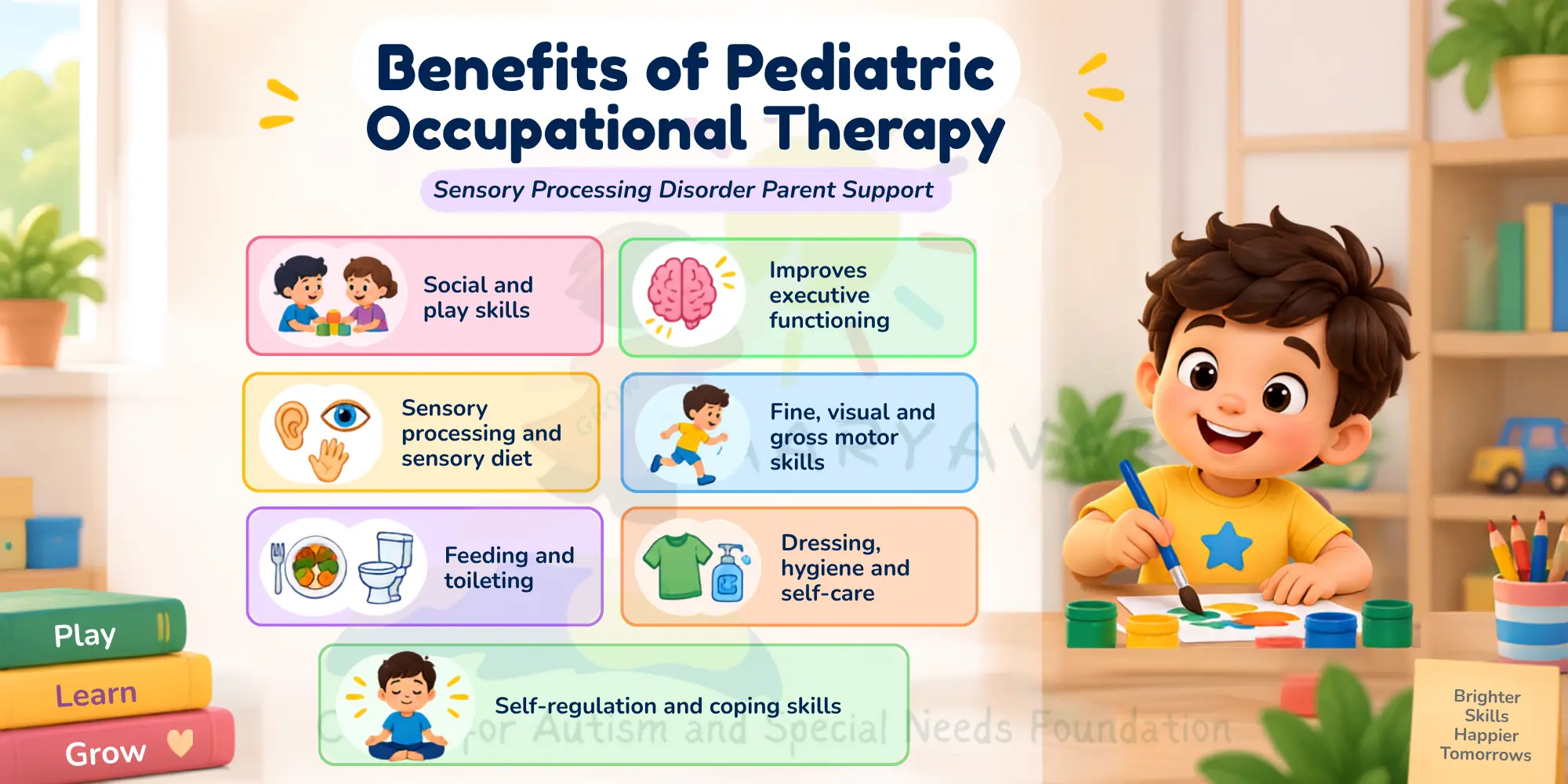
What Sensory Integration Therapy May Work On
A therapy plan may focus on:
- Better sitting tolerance
- Reduced sensory overload
- Improved body awareness
- Better balance and coordination
- Easier transitions
- Improved attention during tasks
- More comfort with textures, touch, or movement
- Better participation in dressing, eating, play, and school routines
The American Academy of Pediatrics explains that sensory integration therapy is play-oriented and may use equipment such as swings, trampolines, and slides, but also notes that evidence is still limited and parents should discuss concerns with a pediatrician or qualified professional.
This is why Aaryavart follows a practical approach: sensory therapy is used as part of a complete therapy plan, not as a magic cure or one-size-fits-all method.
Signs Your Child May Need OT for Sensory Issues
Parents usually search for occupational therapy for sensory processing disorder when daily routines become difficult. You do not need to wait until everything becomes unmanageable.
Your child may benefit from an OT assessment if they:
- Cover ears during mixer, traffic, school assembly, or public places
- Avoid haircuts, nail cutting, brushing, bathing, or toothbrushing
- Refuse certain clothes, shoes, tags, or textures
- Avoid messy play, clay, sand, paint, or sticky foods
- Eat only a few foods because of texture, smell, or taste
- Constantly jump, spin, crash, climb, or seek pressure
- Have poor balance, frequent falling, or poor coordination
- Struggle with pencil grip, handwriting, buttons, zippers, or self-care
- Find it hard to sit, wait, focus, or follow classroom routines
- Have meltdowns in noisy, bright, crowded, or unfamiliar places
One or two signs do not confirm a diagnosis. But if these patterns affect home, school, feeding, sleep, learning, or social life, it is better to get the child assessed.
Sensory Issues, Autism, ADHD, and Developmental Delay
Sensory issues are often seen along with autism, ADHD, speech delay, developmental delay, cerebral palsy, and learning difficulties.
In autism, sensory differences may appear with speech delay, poor eye contact, repetitive play, difficulty with transitions, restricted interests, or social communication differences. The WHO describes autism as a developmental condition involving differences in social communication, behaviour, activities, and sensory reactions, and states that timely evidence-based interventions can improve communication, social skills, well-being, and caregiver outcomes.
The CDC’s latest autism data reports that about 1 in 31 children aged 8 years in monitored U.S. communities were identified with autism, and about 1 in 6 children aged 3 to 17 years had a parent-reported developmental disability during 2009 to 2017. These are U.S. figures, but they show why early identification and developmental support matter.
If your child has autism or suspected autism, sensory therapy for autism should ideally be integrated with other supports such as Autism Therapy, Speech Therapy, Occupational Therapy, behaviour support, and Parent Training.
What Happens in a Sensory OT Assessment?
A good sensory OT plan starts with understanding the child properly. Without assessment, therapy becomes guesswork.
At Aaryavart Centre, the assessment may look at:
- Sensory sensitivity and sensory seeking
- Attention and sitting tolerance
- Fine motor skills
- Gross motor coordination
- Balance and posture
- Motor planning
- Feeding and oral sensory concerns
- Dressing, grooming, and self-care
- Play skills and school readiness
- Behaviour during transitions and routines
- Parent concerns at home and school
After assessment, the team creates a therapy roadmap. This helps parents understand what the child needs first, what can be worked on at home, and whether the child needs centre-based therapy, online guidance, or multidisciplinary care.
You can start with a child assessment here: Book Child Assessment
How Occupational Therapy Supports Daily Life
Sensory occupational therapy should connect directly with real life. The child should not only perform activities inside a therapy room. The goal is to help the child function better at home, school, playground, and social settings.
Feeding and Food Texture Issues
Some children avoid foods because of smell, texture, temperature, colour, or the feeling of food in the mouth. OT may help with gradual exposure, oral sensory work, mealtime routine, posture, and parent strategies.
This does not mean every picky eater needs therapy. But if food refusal is severe, the child eats very limited foods, or mealtime creates daily stress, assessment is important.
Dressing, Grooming, and Self-Care
Children with tactile sensitivity may resist clothes, socks, shoes, haircuts, nail cutting, toothbrushing, bathing, or face washing.
OT may help by breaking routines into smaller steps, using sensory preparation, choosing better timing, modifying textures, and building tolerance slowly.
Attention, Sitting, and School Readiness
Some children cannot sit for learning because their body is not regulated. Others appear lazy or restless, but the issue may be sensory seeking, low body awareness, weak postural control, or poor attention readiness.
OT can support classroom participation through movement breaks, posture work, fine motor activities, sensory strategies, and structured routines.
Meltdowns and Transitions
Crowded places, sudden sounds, bright lights, change in routine, or waiting time can overload some children.
OT helps parents understand triggers and build practical strategies before the meltdown happens. This may include visual routines, calming input, transition warnings, movement breaks, and predictable structure.
Sensory Therapy Near Me: When Should Parents Start?
If you are searching for sensory therapy near me or sensory integration therapy near me, start when sensory issues begin affecting daily life.
Do not wait only because relatives say “he will grow out of it.” Some children improve naturally, but others need structured support. Early guidance often helps parents reduce confusion and respond better at home.
You should consider assessment if sensory issues are affecting:
- Eating
- Sleep
- School participation
- Social outings
- Dressing and grooming
- Learning and attention
- Emotional regulation
- Family routines
Aaryavart provides sensory and occupational therapy support at centres in Lucknow, Gorakhpur, and Unnao, along with online parent-guided support for families across India and abroad.
Can Parents Do Sensory Activities at Home?
Yes, but home activities should be matched to the child’s needs. Random sensory play from the internet may not help every child. For some children, the wrong activity can even increase dysregulation.
A child who seeks movement may need different support from a child who becomes overwhelmed by movement. A child who avoids touch may need a very different plan from a child who constantly seeks deep pressure.
Useful home support may include:
- Predictable daily routines
- Short movement breaks
- Calming bedtime routines
- Deep pressure activities when appropriate
- Gradual texture exposure
- Visual schedules
- Quiet corner or low-stimulation space
- Parent-led play and regulation activities
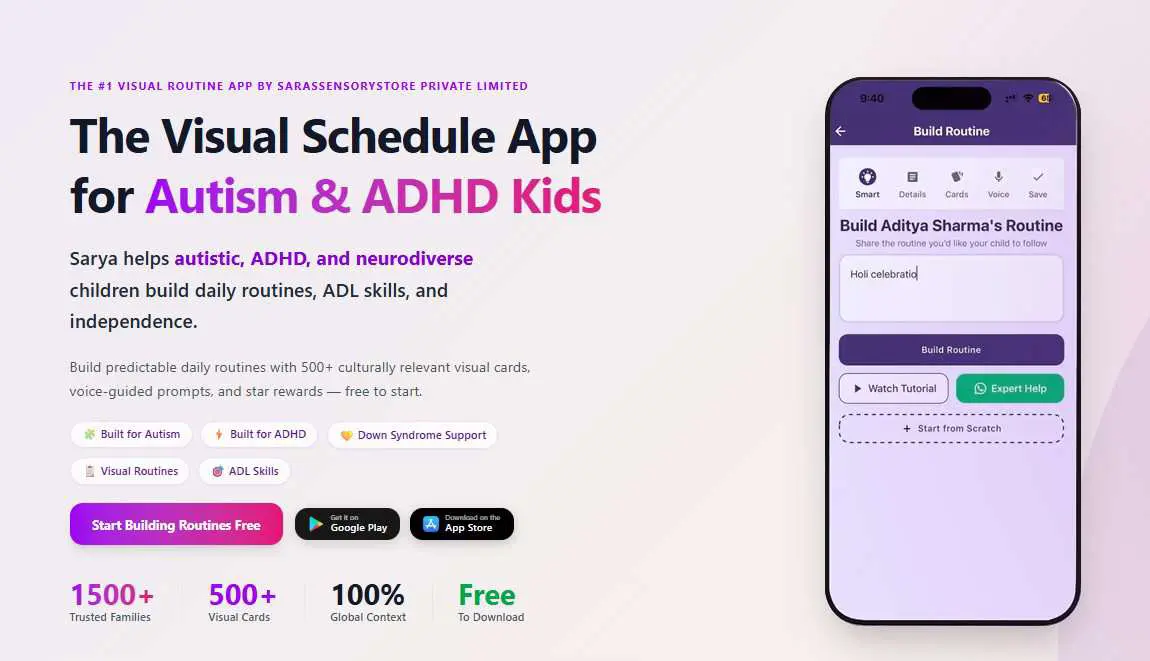
At Aaryavart, parents receive home activity guidance so therapy does not stop when the session ends. This is especially useful for children who need consistency across home, school, and therapy. Parents can use visual schedule apps like Sarya for building routines for their special child.
Sensory Integration Therapy vs Sensory Deprivation Therapy
Many parents also come across the term sensory deprivation therapy online. It is important to understand that this is not the same as pediatric sensory integration occupational therapy.
Sensory integration therapy for children usually involves structured play, movement, touch, pressure, balance, body awareness, and daily routine support under professional guidance.
Sensory deprivation therapy generally refers to reducing sensory input, often through float tanks or similar environments, and it is not the standard therapy approach for children with autism, ADHD, sensory issues, or developmental delays.
For children, the safer and more relevant path is professional assessment, occupational therapy, parent guidance, and a sensory plan based on real functional needs.
How Aaryavart Centre Helps Children With Sensory Issues
Aaryavart Centre provides assessment-led occupational therapy for sensory issues, sensory integration therapy, autism sensory therapy, parent training, and home practice support.
Our team works with children who have sensory processing concerns, autism, ADHD, speech delay, developmental delay, feeding sensitivity, motor coordination challenges, self-care delays, and school readiness difficulties.
Families choose Aaryavart because support is:
- Assessment-led
- Child-specific
- Parent-guided
- Linked to real daily routines
- Available online and centre-based
- Supported by a multidisciplinary team
- Available in Lucknow, Gorakhpur, and Unnao
To explore therapy options, visit:
Conclusion
Sensory issues can affect much more than comfort. They can influence eating, learning, sleep, play, behaviour, communication, and independence.
The right approach is not to panic, label, or ignore. The right step is to understand the child’s sensory profile and build a practical therapy plan.
If your child struggles with sound, touch, movement, textures, feeding, sitting, meltdowns, or daily routines, occupational therapy for sensory issues may help. Start with an assessment and get clear guidance for your child’s next step.
Book a sensory OT assessment with Aaryavart Centre and get a personalised therapy roadmap for your child.
Occupational Therapy for Sensory Issues FAQs
What is occupational therapy for sensory issues?
Occupational therapy for sensory issues helps children manage sensory sensitivity, sensory seeking, body awareness, attention, self-care, feeding, play, and school readiness. It focuses on helping the child participate better in everyday life.
Is sensory therapy the same as occupational therapy?
Sensory therapy is often delivered as part of occupational therapy. A pediatric occupational therapist may use sensory integration activities, motor activities, daily living practice, and parent guidance based on the child’s assessment.
Can occupational therapy help sensory processing disorder?
Occupational therapy may help children with sensory processing difficulties by improving regulation, tolerance, attention, daily routines, and participation. However, parents should know that “sensory processing disorder” is not always used as a stand-alone diagnosis, and professional assessment is important.
Does sensory therapy help autism?
Many autistic children have sensory differences. Sensory therapy for autism may support regulation, transitions, attention, play, feeding, and daily routines. It works best when included in a broader therapy plan.
When should I take my child for sensory OT?
Consider an OT assessment if your child’s sensory issues affect eating, dressing, grooming, school, sleep, behaviour, attention, or family routines.
Does Aaryavart provide sensory therapy near me?
Aaryavart provides sensory therapy and occupational therapy at centres in Lucknow, Gorakhpur, and Unnao. Online parent-guided sensory support is also available for families across India and abroad.
Can sensory issues improve with home activities?
Home activities can help when they are chosen correctly for the child’s sensory profile. A therapist-guided home plan is safer and more useful than random sensory activities from social media.
How do I start sensory therapy at Aaryavart?
Start with a child development or OT assessment. The team will understand your child’s sensory, motor, behavioural, feeding, and routine-related needs, then suggest a personalised therapy plan.