Is Autism Genetic? Causes, Family Risk and What Parents Should Know
Is autism genetic? Learn how genes, family history and other factors may influence autism, plus when to seek expert support.

Is autism genetic? This is one of the most common questions parents ask when they notice early developmental, social, or communication differences in their child. Autism spectrum disorder is a neurodevelopmental condition, and research from globally trusted sources such as the CDC, WHO, and MedlinePlus shows that genetics can play an important role. However, autism is complex. It is not caused by one single gene, and many children with autism have no clear family history. In most cases, genetic factors, brain development, and other risk influences may work together. Understanding the genetic link can help families make informed decisions, seek early screening, and access the right therapy and developmental support at Aaryavart.
What is Autism?
Autism, also called autism spectrum disorder, is a neurodevelopmental condition that affects how a person communicates, learns, behaves, and interacts with others. The word “spectrum” means autism can look different in every child. Some children may have delayed speech, limited eye contact, repetitive behaviours, sensory sensitivities, or difficulty with social communication, while others may show strong memory, focus, or unique learning strengths. According to the CDC and WHO, autism is linked to differences in brain development and may involve genetic and other developmental factors. Early screening, diagnosis, and therapy can help children build communication, social, and daily living skills with the right support.
Is Autism Genetic?
Yes, autism can have a strong genetic link. However, it is usually not caused by one single gene.
Autism spectrum disorder is a complex neurodevelopmental condition. This means it affects how the brain develops, communicates, learns, and processes information.
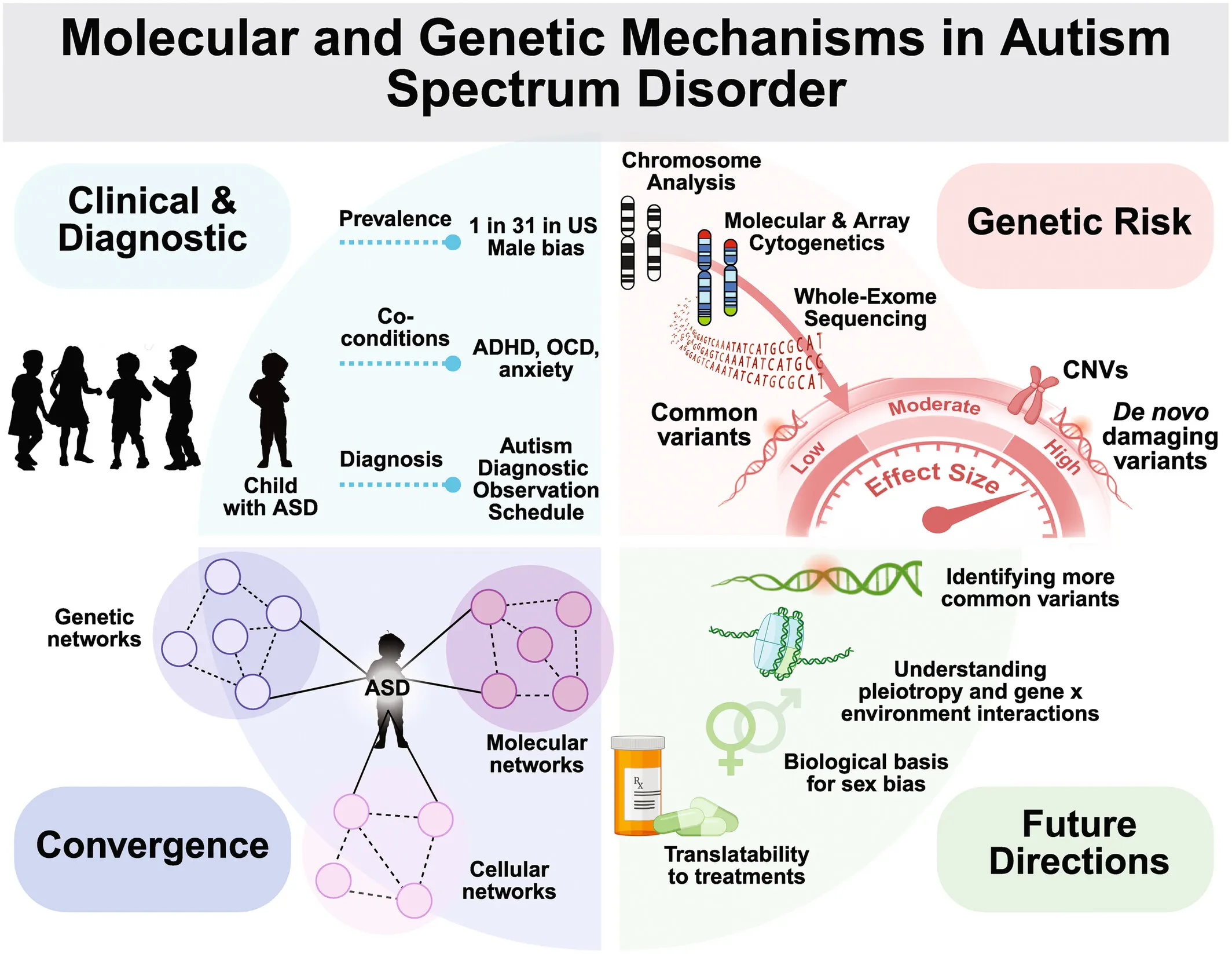
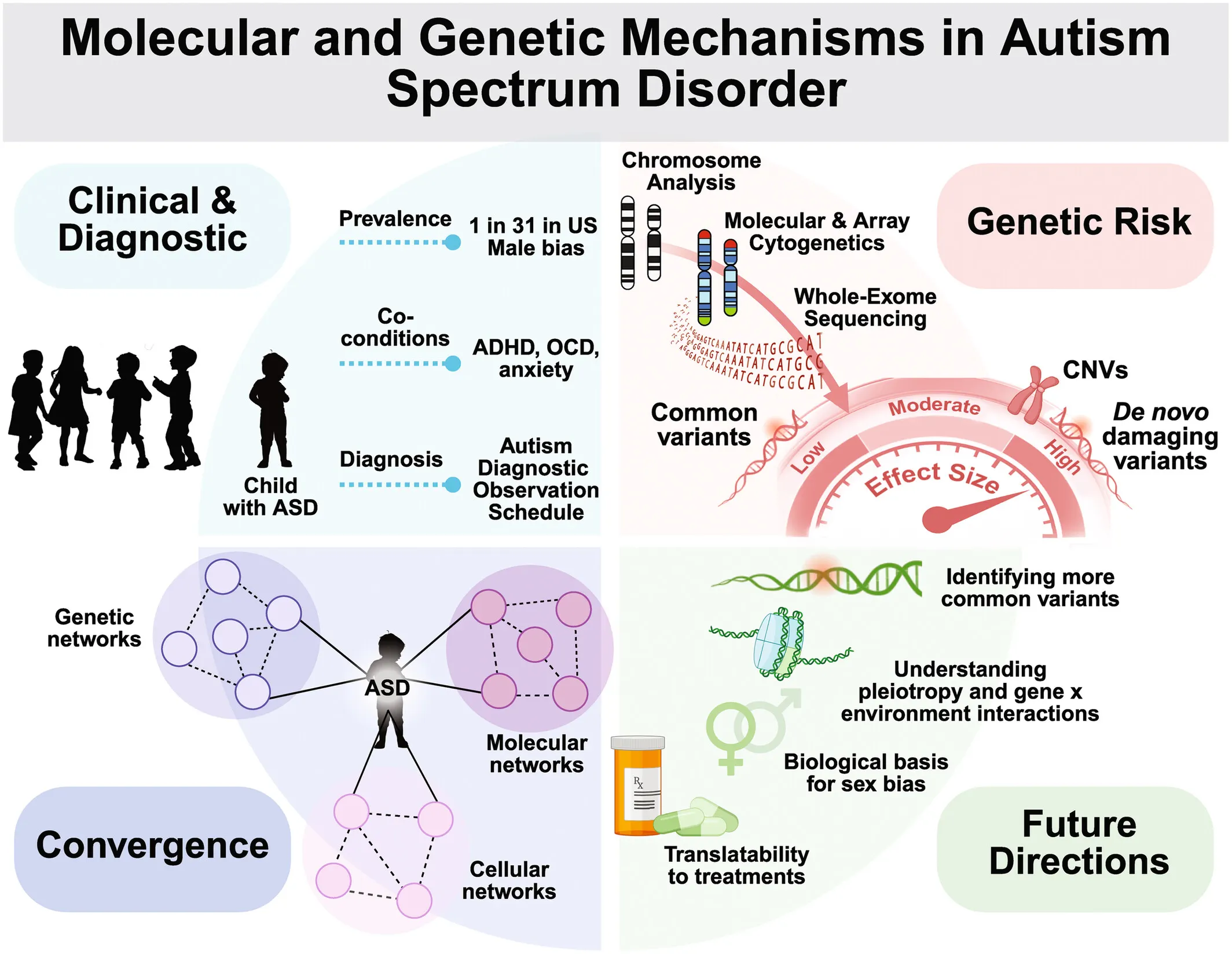
Source: Wiley Online
According to trusted medical sources such as the CDC and MedlinePlus Genetics, researchers believe autism may involve:
- Many different genes
- Early brain development
- Inherited genetic changes
- New genetic changes in the child
- Other developmental or environmental influences
For parents, the most important thing to understand is this:
Autism is not anyone’s fault.
It does not happen because of:
- Poor parenting
- Lack of discipline
- Screen time alone
- Lack of love or care
In many children, autism may be linked to small differences in genes that influence how the brain develops. These genetic differences may be inherited from parents, or they may appear for the first time in the child.
This is why autism can look different in every child. For example:
- One child may have delayed speech
- Another child may speak well but struggle with social communication
- Some children may have sensory sensitivities
- Some may show repetitive behaviours or strong routines
Genetics can increase the chances of autism, but it does not explain every child’s diagnosis in the same way.
Can Autism Run in Families?
Yes, autism can run in families.
If one child has autism, the chances of another child in the same family also being autistic are higher than in families with no autism history. Research from the American Academy of Pediatrics has found that younger siblings of autistic children have a higher recurrence risk than the general population.
However, this does not mean every sibling will have autism. It only means the chances are higher.
Parents may benefit from watching early developmental signs, especially if one child in the family already has autism.
Important milestones to observe include:
- Eye contact
- Response to name
- Pointing or gestures
- Speech development
- Play skills
- Social interaction
- Repetitive movements
- Sensory sensitivities
Autism can also happen in a child with no known family history.
This may happen because of new genetic changes, also called de novo genetic changes. These changes appear for the first time in the child and are not always inherited from the parents.
Sometimes, families may also have mild or unnoticed traits, such as:
- Social communication differences
- Sensory sensitivity
- Strong need for routine
- Learning differences
- Delayed speech history
- Attention or behavioural differences
So, family history is important, but it is not the only factor. A child can be autistic even if no parent, sibling, or relative has been diagnosed before.
Which Genetic Factors Are Linked to Autism?
Autism is linked to many possible genetic factors. Scientists are still studying how these factors affect brain development.
Some children may have inherited genetic variants. These are genetic differences passed down from one or both parents.
Others may have new genetic changes that happen for the first time in the child.
Some genetic factors linked to autism include:
- Inherited variants: Genetic differences passed from parents to the child
- De novo variants: New genetic changes that are not found in the parents
- Copy number variants: Small sections of genetic material may be missing, repeated, or changed
- Single-gene conditions: Changes in one specific gene that may affect development
- Chromosomal differences: Larger changes in chromosomes that may influence brain development
Certain known genetic conditions are also associated with autism or autism-like developmental features, including:
- Fragile X syndrome
- Rett syndrome
- Tuberous sclerosis complex
- Down syndrome
- Some chromosomal differences
MedlinePlus Genetics describes Fragile X syndrome as a genetic condition that can cause developmental delays, learning difficulties, speech delay, and autistic features.
It is important to know that genetic testing does not diagnose autism by itself.
Autism is usually diagnosed through:
- Developmental history
- Behaviour observation
- Communication patterns
- Social interaction assessment
- Clinical evaluation by specialists
However, doctors may suggest genetic testing in some cases, especially if the child also has:
- Intellectual disability
- Seizures
- Significant developmental delay
- Unusual physical features
- Strong family history
- Other medical concerns
If parents are worried about their child’s development, it is better not to wait. Early screening, expert evaluation, and timely therapy can support communication, learning, behaviour, and daily living skills.
Are Environmental Factors Also Involved?
Yes, environmental factors may also be involved, but they usually work together with genetics and early brain development. Autism is not caused by one simple reason. Researchers believe that autism may develop when a child has certain genetic differences and is also exposed to other risk factors during early development.
These factors may influence how the brain grows before birth or in early childhood. However, they do not mean parents caused autism.
Possible risk factors studied by researchers include:
- Advanced parental age
- Premature birth
- Low birth weight
- Certain pregnancy or birth complications
- Some genetic or medical conditions
- Differences in early brain development
It is important to understand that autism is not caused by:
- Parenting style
- Lack of love
- Vaccines
- Discipline issues
- Screen time alone
For parents, the key message is simple: autism is complex, and every child’s development is different. The right Assessment and early support can help families understand their child’s needs and choose the best intervention plan.
When Should Parents Seek Help?
Parents should seek help if they notice developmental, communication, or behavioural differences in their child. Early Assessment is important because timely support can improve communication, learning, social interaction, and daily living skills.
You should consult a child development specialist, developmental pediatrician, psychologist, occupational therapist, or speech therapist if your child shows signs such as:
- Delayed speech or no speech
- Limited eye contact
- Not responding to their name
- Difficulty pointing, waving, or using gestures
- Repetitive behaviours, such as hand flapping or spinning objects
- Strong resistance to routine changes
- Sensory issues, such as discomfort with sounds, textures, lights, or touch
- Difficulty playing with other children
- Limited social communication
- Loss of previously learned words or skills
Parents should not wait for the child to “grow out of it” if concerns are clear. Some children do catch up naturally, but others need structured support.
A professional Assessment can help identify:
- The child’s communication level
- Social and behavioural needs
- Sensory difficulties
- Learning strengths
- Areas where therapy may help
Parental Training is also very important. When parents learn how to support communication, behaviour, routines, and daily skills at home, therapy becomes more effective and consistent.
How Aaryavart Can Help?
Aaryavart can support families by helping them understand their child’s developmental needs with care, clarity, and professional guidance. If parents are worried about autism signs, speech delay, sensory issues, or social communication difficulties, Aaryavart can guide them toward the right next step.
Aaryavart focuses on personalised support rather than a one-size-fits-all approach. Every child is different, so the support plan should also be different.
Aaryavart can help with:
- Early screening guidance
- Developmental Assessment support
- Therapy planning
- Parent counselling
- Parental Training
- Behaviour support guidance
- Speech and communication support planning
- Sensory and occupational therapy guidance
- Personalised intervention planning
- Ongoing family support
The goal is to help parents feel informed, supported, and confident. With the right Assessment, therapy plan, and Parental Training, families can better understand their child’s strengths and challenges.
If you notice early signs of autism or developmental delay, reaching out to Aaryavart can be a helpful first step toward timely support and personalised intervention.
Is Autism Genetic FAQs
Is autism inherited from mother or father?
Autism can be linked to genetic factors from either parent or both parents. Sometimes, it happens due to new genetic changes in the child. There is no single “autism gene,” and autism is usually influenced by many genes and early brain development.
Can genetic testing diagnose autism?
No, genetic testing alone cannot diagnose autism. Autism is diagnosed through developmental history, behaviour, communication, and clinical assessment. Genetic testing may help identify related conditions, such as Fragile X syndrome or chromosomal differences, in some children.
Can autism happen without family history?
Yes, autism can happen without any known family history. Some children have new genetic changes that are not inherited from parents. In other cases, mild traits may exist in the family but were never diagnosed.
Does having one autistic child increase risk?
Yes, having one autistic child can increase the chance of autism in another child. However, it does not mean every sibling will be autistic. Parents should monitor speech, eye contact, gestures, play skills, and social communication early.
Is autism curable?
Autism is not a disease, so it is not considered “curable.” It is a lifelong neurodevelopmental condition. However, early intervention, therapy, Parental Training, and structured support can help children improve communication, behaviour, learning, and daily living skills.
When should I consult a specialist?
Consult a specialist if your child has delayed speech, limited eye contact, repetitive behaviours, sensory issues, poor social communication, or loss of learned skills. Early Assessment and therapy planning can help children get the right support at the right time.